Recent advances in protein structure prediction have transformed early drug discovery, but they have also revealed a new bottleneck: understanding what a molecule looks like is no longer the primary challenge—understanding whether it will bind with sufficient strength and selectivity to matter biologically is.
Binding affinity prediction depends on diverse experimental evidence. Critical output from screening assays, biophysical measurements, simulations, and negative results are distributed across companies and collaborators and cannot realistically be centralized due to intellectual property, governance, and regulatory constraints. Consequently, progress is increasingly limited, not by model design alone, but by how models can safely learn from fragmented data.
In this session, we will discuss how federated AI approaches enable organizations to contribute to, improve and evaluate affinity models without sharing proprietary datasets. By allowing models to train and run where data already resides, institutions can contribute signal while maintaining control over sensitive information.
The broader question we will examine is whether the next phase of AI-enabled discovery will depend less on isolated model breakthroughs and more on new mechanisms for secure, collective learning across the scientific ecosystem.

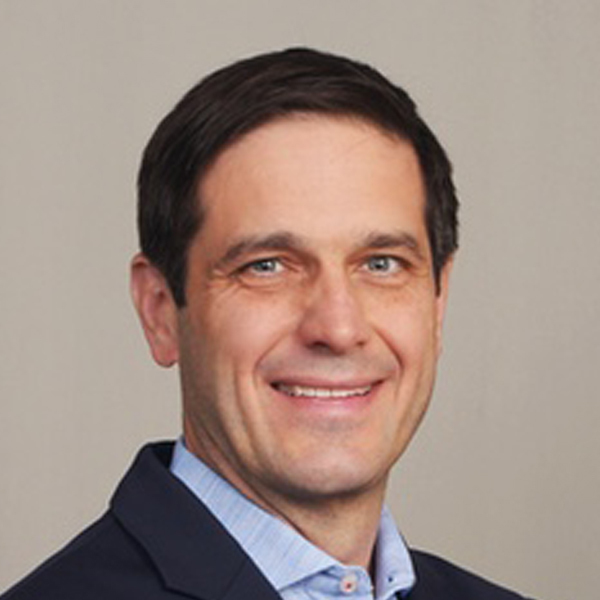
Justin Scheer serves as the Vice President of In Silico Discovery. In this role, he oversees a global team delivering cutting-edge solutions in AIML, Bioinformatics, Cheminformatics, Structure-based Drug Design, Protein Modeling, and Generative Design. His modality expertise spans a wide spectrum, including Small Molecule Discovery, Peptides, Antibody Discovery/Engineering, Bispecifics, siRNA, Gene Therapy, Cell Therapy, and RNA platforms and his team impacts programs across all of J&J’s Therapeutic Areas.
Justin holds a PhD in Biophysics and Biochemistry from Washington State University and an NIH Postdoctoral Fellowship at the University of California, San Francisco.
Before becoming head of In Silico Discovery, he held the position of Vice President, Interim Head of Cell Therapy and Vice President, Gene Therapy and Gene Delivery Platforms. Prior to J&J, Justin was Executive Director for Boehringer Ingelheim’s Biotherapeutics Discovery & Engineering Platform Capabilities team, and earlier, led the discovery of multiple therapeutic molecules at Genentech, including Lunsumio, a bispecific antibody for lymphoma patients.
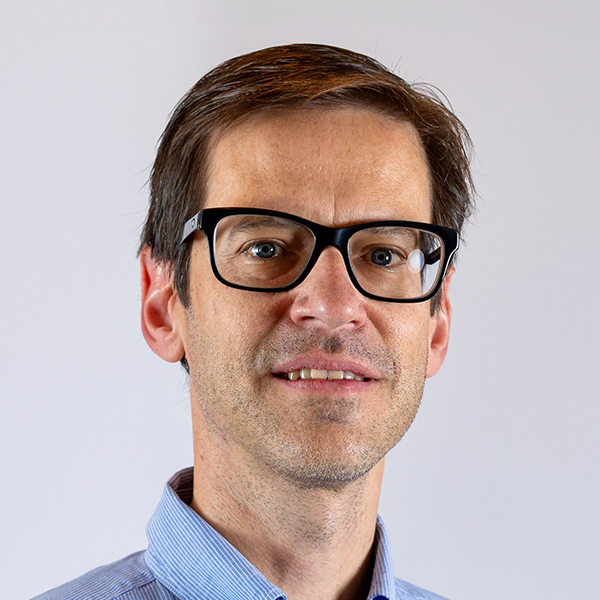
Andrea Bortolato is Vice President of Drug Discovery at SandboxAQ and a founding member of its AQBioSim division, bringing more than 20 years of experience in computational chemistry and drug discovery. He has led R&D across biotechnology, pharmaceutical, and agrochemical companies and is named on over 60 scientific patents and publications, including three articles in Nature. Before joining SandboxAQ, Andrea directed drug discovery project teams at Bristol Myers Squibb (BMS), Schrödinger, Heptares (now Nxera Pharma), and Syngenta, working on both internal programs and collaborations with partners such as Takeda, AstraZeneca, Cubist, Morphic, Roche, Sanofi, and Structure Therapeutics. Andrea earned his PhD in computational chemistry through a joint program between the University of Padua (Italy) and the University of Geneva (Switzerland), followed by a postdoctoral fellowship at the Icahn School of Medicine at Mount Sinai in New York City.
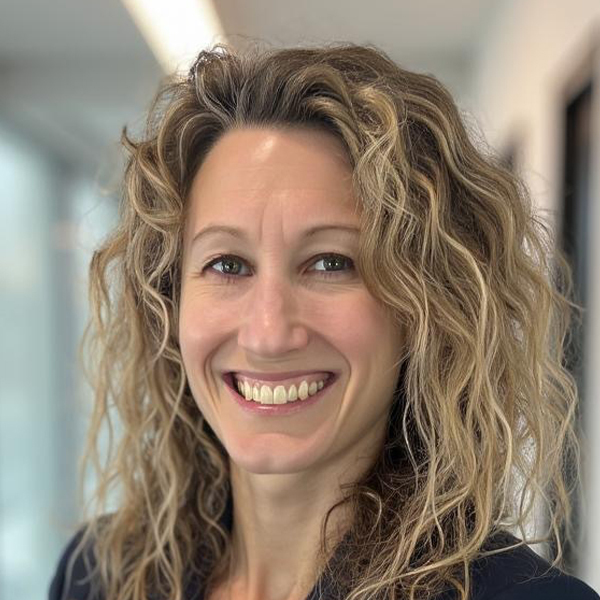
Elke S. Nelson-Nichols, Ph.D., M.B.A., is Vice President of Life Sciences at Rhino Federated Computing, where she helps biopharma organizations operationalize secure, privacy-preserving AI across the R&D lifecycle. She previously held leadership roles at Tempus AI, managing large-scale precision medicine collaborations, and at ECRI Institute, where she focused on digital transformation and medical safety. A valedictorian MBA graduate from Penn State and a Ph.D. in Molecular and Cellular Biology from the University of Iowa, Dr. Nelson-Nichols is a frequent speaker on the intersection of AI and healthcare value generation.
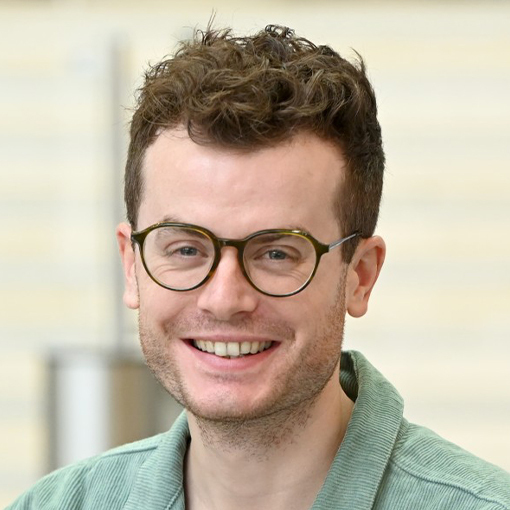
Benjamin is a science journalist based in London with 15 years of experience covering and editing emerging trends within the medical and pharmaceutical sciences. He has worked in newsrooms around the world and his stories have been published in outlets such as the Associated Press, Chemical & Engineering News, Discover Magazine, Nature, Scientific American, and Wired.